
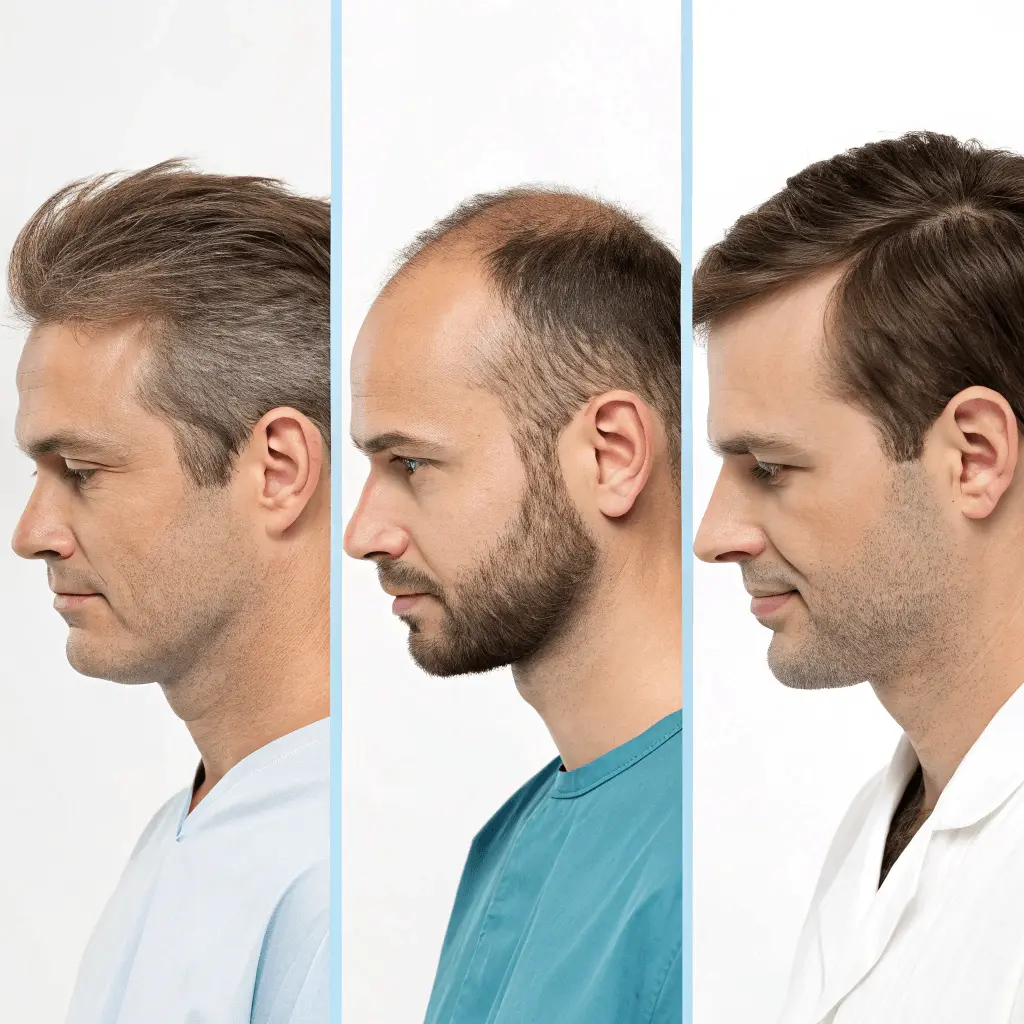
Hair transplant conversations used to sound simple: how many grafts do you need, how much will it cost, and how soon will you see growth? In 2026, the conversation is more detailed. Patients are comparing FUE, DHI, Sapphire FUE, hybrid approaches, donor preservation, hairline design, density planning, and recovery expectations before they even walk into a clinic.
That is a good thing, but it can also make the decision confusing. The best technique is not always the newest one or the one with the most impressive name. It is the one that matches your hair loss pattern, donor area, age, scalp condition, hair caliber, styling habits, and long-term plan.
Here is a practical way to understand the three commonly discussed approaches.
What FUE means
FUE stands for follicular unit excision. In this method, individual follicular units are removed from the donor area, usually the back and sides of the scalp, and then implanted into thinning or bald areas. Because it does not require a long linear incision, FUE is often preferred by people who want shorter hairstyles or a less visible donor scar.
FUE can work well for larger coverage areas, crown work, frontal reconstruction, beard restoration, and corrective cases when the donor area is suitable. The key challenge is not simply removing grafts. It is removing them evenly, protecting graft quality, and avoiding overharvesting. A good FUE plan respects the donor area because donor hair is limited. Once follicles are removed, that exact follicle does not regrow in the donor zone.
What DHI means
DHI, often called direct hair implantation, is usually discussed as an implantation-focused method. Instead of creating all recipient sites first and then placing grafts with forceps, many DHI systems use implanter pens that help place grafts with control over angle, depth, and direction.
DHI can be useful in highly visible areas, especially hairlines and temples, where direction matters. It may also be considered when a patient wants implantation between existing hairs, although that depends on density, scalp visibility, and surgeon comfort. However, DHI is not automatically better for every case. It can be time-intensive and may not be the most efficient option for very large coverage areas.
What Sapphire FUE means
Sapphire FUE is a variation of FUE where the recipient channels are created using blades with sapphire tips rather than standard steel blades. The goal is to create refined channels for graft placement. Supporters often discuss benefits such as precise incisions, potentially comfortable healing, and dense packing in selected cases.
But the word “sapphire” alone does not guarantee a better result. The final outcome still depends on graft handling, planning, the surgeon’s experience, the team’s coordination, and aftercare. A poorly planned Sapphire FUE procedure can look unnatural, while a well-planned standard FUE procedure can look excellent.
How to choose between them
The first decision should not be the technique. It should be the diagnosis. Is the hair loss stable or rapidly progressing? Is it male or female pattern hair loss, traction-related loss, a scar, or another condition? Is the donor area strong enough for the desired coverage? Does the patient need surgery now, medical therapy first, or a staged plan?
For a broad bald area, classic FUE may allow efficient coverage. For a refined frontal hairline, DHI or a hybrid plan may help with placement control. For patients who want precise channel creation and are suitable for dense packing, Sapphire FUE may be considered. Some cases use more than one method in the same sitting because the hairline, mid-scalp, and crown do not always need the same approach.
This is why clinics that explain technique within a full diagnosis are easier to evaluate. For example, Kibo Clinics discusses FUE, Sapphire FUE, hairline correction, body hair FUE, corrective hair transplant, and regrowth treatments as separate options rather than forcing every patient into one label.
Questions to ask before deciding
Ask who designs the hairline, who extracts the grafts, who creates recipient sites, and who supervises implantation. Ask how the donor area will be protected. Ask whether the plan accounts for future hair loss. Ask to see results that match your age, hair type, and pattern, not just the most dramatic before-and-after photos.
Also ask what happens if the first result is conservative. A natural hair transplant often aims for age-appropriate improvement, not an artificial wall of hair. The right density in the right location can look better than chasing the highest graft number.
The bottom line
FUE, DHI, and Sapphire FUE are not rivals in a beauty contest. They are tools. The artistry lies in knowing when to use each tool, when to combine methods, and when to avoid surgery until the hair loss pattern is clearer. In 2026, the smartest choice is not the trendiest technique. It is a technique chosen after careful planning, honest expectations, and a donor-first approach.
About the Author