
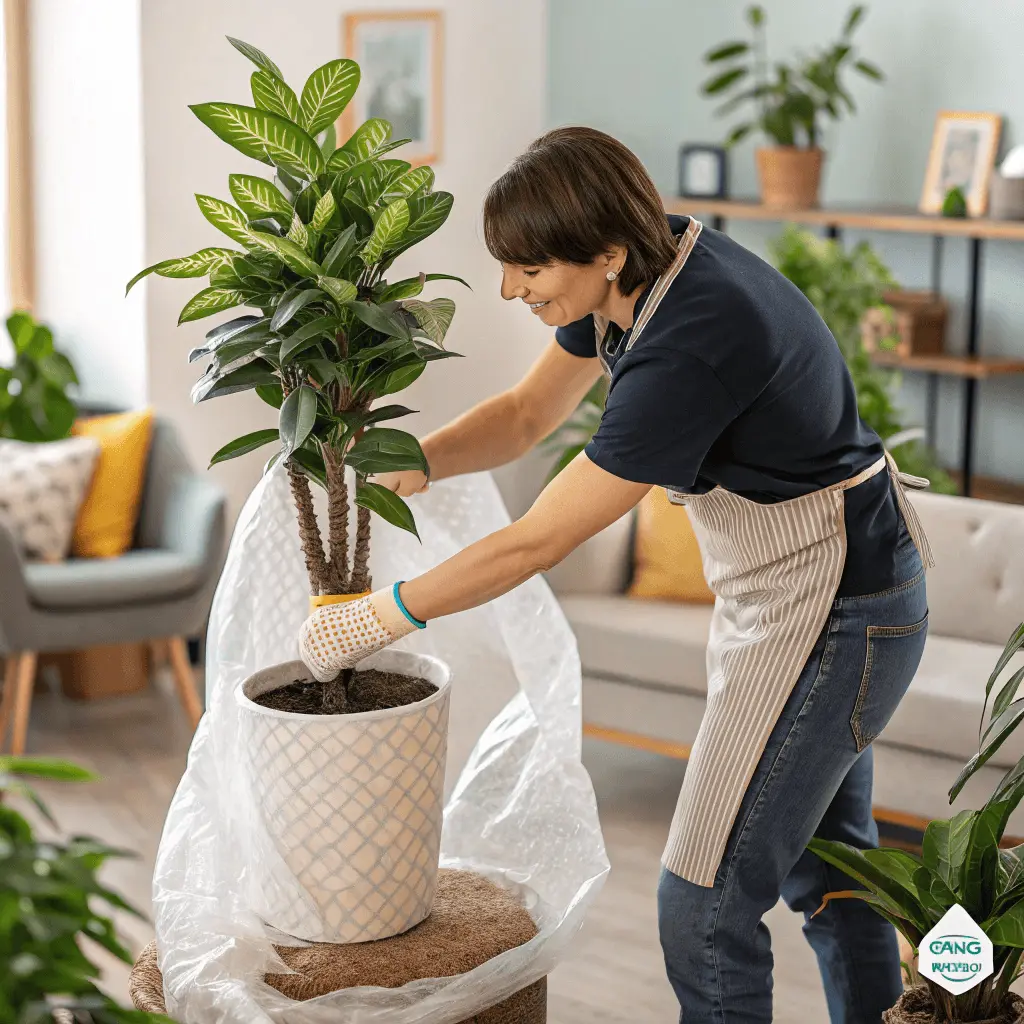
Houseplants are the one moving category that does not respond well to being put in a box and forgotten until tomorrow. Most plants tolerate a short relocation if prepped correctly. Some don’t, and are better given away to friends. The difference comes down to species, transit time, and how you handle the week before the move.
Here is the realistic guide.
Plants do not ride in moving trucks
The temperature inside a moving truck — especially in summer or winter — swings 30-50 degrees from ambient. Most houseplants die at extremes. Plants ride with you, in your car, with the climate control running.
If you do not have a car, plants ride in a sturdy box on the subway, in a taxi, or are given to a friend. They do not go in the moving truck — most moving services nyc policies explicitly exclude live plants from the load alongside perishables and pets, because the climate inside the truck can’t keep them alive.
Two weeks out: prune and downsize
This is the moment to:
- Prune any leggy growth or dead leaves
- Treat for any pests with a mild insecticidal soap (many states inspect plants at the border; pest-infested plants get quarantined)
- Repot any plant that is in a fragile decorative pot, transferring it to a sturdier plastic nursery pot for the move
Pruning a week or two in advance lets the plant recover before the move stresses it again.
One week out: water schedule
Slightly under-water in the week before the move. Moist soil is heavier than dry soil and waterlogged plants are more vulnerable to root rot during transit. Skip the watering 2-3 days before the move so the soil is on the dry side of moist.
The exception: succulents and cacti, which prefer to travel completely dry.
The day before: pack the pots
Each plant goes into its own container — a sturdy plastic box, an open cardboard box, or a milk crate. Wrap the pot with newspaper or paper towels to hold soil in place if it tips.
For tall plants:
- Wrap loose stems and branches gently with twine to keep them from breaking
- Cover larger plants with a paper bag (not plastic — plastic traps moisture and heat)
For trailing plants (pothos, philodendron):
- Gather the trailing vines and tie them gently
- Place the pot in a deeper box so the vines drape down rather than flop sideways
Transit techniques
- Plants ride upright. Tipping them sideways loses soil and damages stems.
- Avoid direct sunlight through car windows in summer — a 90°F day inside a parked car can hit 130°F in 20 minutes.
- Don’t put plants in the trunk. Trunks are dark, hot in summer, freezing in winter.
- For long-distance car rides, stop every 2-3 hours and check the plants briefly.
Species that travel well
Most common houseplants tolerate a typical move (1-3 hours of transit) reasonably well:
- Pothos
- Snake plant
- Spider plant
- ZZ plant
- Philodendron
- Most succulents and cacti
- Dracaena
- Rubber plant (smaller ones)
These are sturdy, tolerant of brief stress, and recover within days of arriving.
Species that struggle
Some plants are more sensitive — they may survive a short move but often drop leaves or fail to recover. Consider giving these away if you can’t guarantee a gentle move:
- Fiddle-leaf fig (notoriously sensitive to any change)
- Bird of paradise (large, awkward, breaks easily)
- Ferns (drop leaves at the slightest disturbance)
- Calatheas and prayer plants (very sensitive to temperature swings)
- Citrus trees (large, fragile, prone to fruit drop)
- Orchids in bloom (the blooms drop during transit)
If you have any of these and the move is more than a couple of hours, talk to a local plant friend about a swap or temporary care arrangement.
After arrival
For the first 1-2 weeks after the move, your plants will adjust to new light, humidity and temperature. Expect:
- Some leaf drop (especially on fiddle-leaf and rubber plants)
- Pause in growth
- Increased water uptake (or decreased, depending on the new spot)
Don’t repot during this adjustment period. Don’t fertilize for at least three weeks.
About the Author